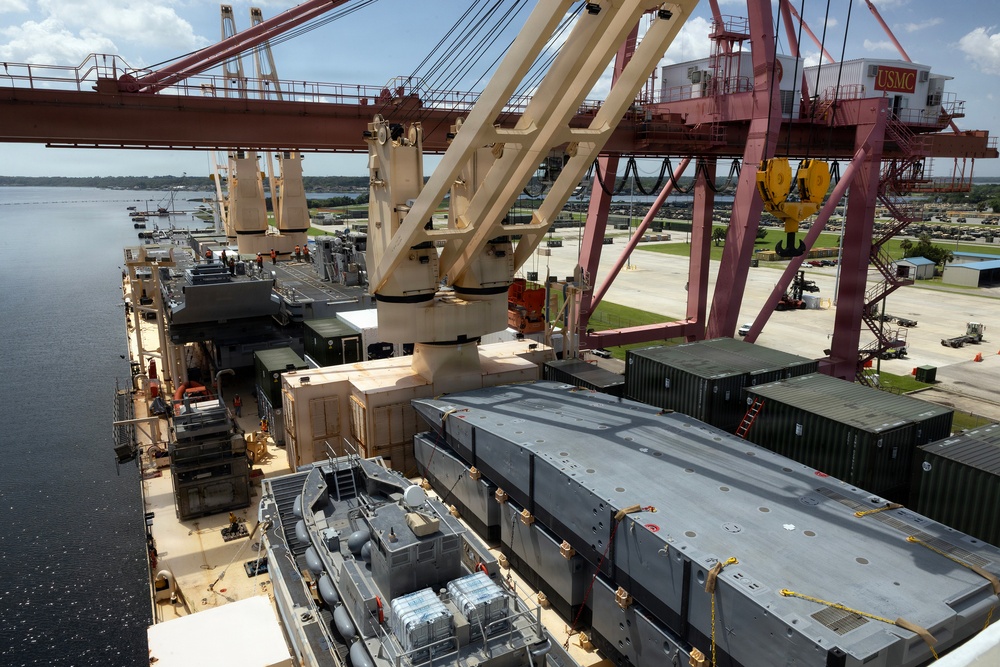
- A force’s usable power is bounded by what it can move, maintain and replenish.
- Transport networks, industrial capacity and civilian infrastructure belong inside strategic analysis.
- Resilient logistics balances efficiency with redundancy, interoperability and recovery capacity.
Capability exists only when it can be sustained
Military power is often described through platforms, personnel and headline expenditure. Those measures matter, but they do not tell us how long a force can operate, how far it can move, or how quickly it can recover. A capability that cannot be supplied, repaired or replaced is a temporary effect rather than durable power.
NATO defines logistics broadly: the supply, movement and maintenance of resources and services across the full spectrum of operations. Its guidance treats logistics as something that must be designed into planning from the beginning. That point is strategic. It means operational ambition has to remain connected to the physical systems that make action possible.
The supply chain is part of the balance of power
Logistics connects the front line to ports, roads, railways, warehouses, energy networks, industrial plants and skilled labour. Many of these assets sit outside military organizations. Their condition, location and governance affect military choices before a crisis begins.
This creates a second layer of strategy. Decision-makers must consider not only whether a force has sufficient equipment, but whether the wider system can deliver the right resources at the required tempo. Distance, infrastructure capacity, customs arrangements, maintenance standards and commercial dependencies can all widen or narrow the set of feasible options.
Efficiency and resilience pull in different directions
Commercial supply chains often reward low inventories and concentrated production. Defence resilience may require spare capacity, alternative routes, dispersed stockpiles and suppliers that appear inefficient in peacetime. The relevant question is therefore not whether a system is maximally lean, but whether it can continue to function under disruption.
Redundancy alone is not enough. Stockpiles without accurate visibility can be unavailable in practice. Multiple national systems without interoperable standards can create delay. Resilience emerges from a combination of capacity, information, coordination and the authority to act when conditions change.
The strategic test
A serious assessment of military capability should ask four connected questions: What can be deployed? What can be sustained? What can be regenerated? And which political, industrial or infrastructural dependencies could interrupt those functions?
These questions turn logistics into a measure of strategic credibility. They also explain why alliances establish shared standards and coordinating bodies. Collective defence depends on collective movement, maintenance and supply—not simply collective declarations.
References
This article is an analytical synthesis of publicly available sources. It is published by Fitrah Renaissance for research and educational purposes and does not provide operational or legal guidance.